
Labor challenges in grocery and wholesale, such as high turnover rates and rising labor costs, are well known. Retail worker quit rates are over 70% higher than other US industries, with turnover reaching 95% recently. This is partly due to inadequate tools for tasks like inventory management, which associates often cite as the worst responsibility.
To address this, progressive stores are improving operational efficiency to save time, labor, and costs – giving workers more time to focus on customers.
In a recent webinar, industry leaders gathered to discuss the real-world impact of using robots in retail stores. The panel included:
- Adrian Salazar, Store Manager @ Schnuck Markets
- Jon VanderMolen, Finance Manager @ SpartanNash
- Jeremy Wortsman, Sr. Director of Customer Success @ Simbe
- Caitlin Allen, SVP of Market @ Simbe
This discussion was framed around Simbe's inaugural Store Team Technology Sentiment Report, which gathered responses from nearly 200 store managers using the inventory robot, Tally. The survey highlighted multiple positive impacts of the technology, reinforcing the value of deploying automation across retail chains.
The following is a recap of the conversation, outlining a crawl-walk-run approach to integrating robotics into retail operations and highlighting their experiences and best practices from working with Tally in-store.
Crawl: Secrets to Success When Deploying In-store Technology Like Robotics
Before successfully deploying new technology, it’s crucial to establish alignment and set clear expectations across the retail organization. As Adrian emphasized, driving true alignment within the grocer Schnucks Markets was essential to ensure everyone understood what was expected with the new technology:
“Before you roll out, you really have to drive true alignment in your organization on what the expectations are.”
Laying the groundwork involves not only defining the goals and expectations but also ensuring that all levels of the organization are on board. This includes top executives, who play a vital role in championing the technology. Jon highlighted this critical aspect:
“You cannot underestimate the importance of having your CEO, retail executive vice president, and CIO talking about Tally and seeing that they are bought in.”
To learn how retail executives evaluate in-store tech, read our blog.
Additionally, a structured rollout plan, thorough training, and continuous feedback loops are essential to address any issues promptly and keep the deployment on track.
Key Steps in Deployment:
- Define Clear Expectations: Ensure everyone understands the goals and expected, cross-compnay benefits of the new technology.
- Engage Leadership: Secure buy-in from top executives to drive the retail initiative forward.
- Plan and Train: Develop a detailed rollout plan and provide comprehensive store technology training to all users.
- Feedback Mechanism: Establish channels for continuous feedback to refine and improve the deployment process.
Walk: Boosting Productivity, Efficiency, and Customer Loyalty with Tally
Adopting new technology like Tally requires a strategic approach to maximize its impact on productivity, efficiency, and customer service.
Initial Findings and Customer Loyalty
The initial analysis of Tally’s impact at SpartanNash highlighted its significant positive influence on operations. Jon shared:
“Tally helps us sell more and strengthens customer loyalty by ensuring products are always available.”
This real-time data from Tally's daily reports and priority pick lists enabled SpartanNash to improve product availability and enhance the overall shopping experience.
Productivity and Efficiency
Adrian discussed the transformation in productivity at Schnuck Markets:
“We’ve seen a significant increase in store team morale and retention. Employees are more engaged and less burdened by monotonous tasks.”
By automating repetitive tasks, Tally allowed store teams to focus on more engaging activities, improving both employee satisfaction and operational efficiency.
Enhancing Customer Service and Experience
Jeremy, who previously worked as a store manager at Target, emphasized Tally's role in enhancing customer service:
“Tally allows store associates to focus on higher-value tasks like assisting customers, which enhances the overall shopping experience.”
Freeing up associates from inventory tasks enabled them to provide better customer support, thereby improving the overall experience for shoppers.
Adrian also noted the positive response from customers:
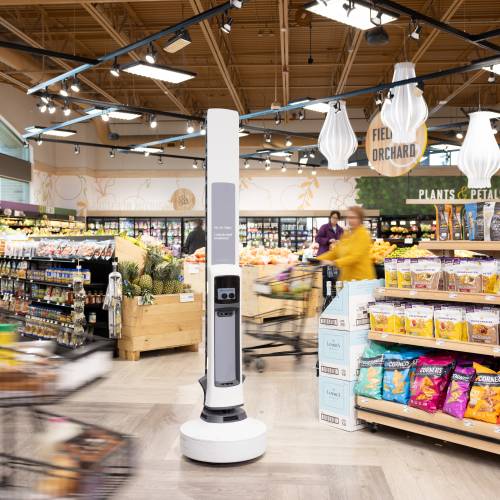
“Our customers love seeing Tally. The robot’s design – with its eyes and the sounds it makes – gives it a personality that our shoppers have really embraced.”
Some shoppers plan their trips to coincide with Tally's runs. See their perspective here.
Key Steps in Adoption:
- Utilize Real-Time Inventory Data: Leverage Tally’s data to address out-of-stock issues and improve product availability, improving shopping and store team experiences.
- Employee Training and Engagement: Ensure store teams are well-trained and understand the benefits of using Tally.
- Enhance Customer Service: Allow store associates to focus on assisting customers, creating a better shopping experience.
- Establish Best Practices: Develop chainwide best practices, benchmarks, and accountability measures to ensure successful adoption.
Run: Leveraging Store Technology like Tally the Robot at Scale to Maximize Business Value
Insights straight from Simbe's customer base reveal the best strategies for maximizing the value of Tally across various store functions and expanding its use cases. Jeremy highlighted:
"Our customers often extend the use of in-store technology beyond just measuring stock levels. They digitize pricing, track inventory locations, and automate replenishment. The implementation sequence varies based on the store’s specific needs, but the guiding principle is to prioritize areas with the highest impact first."
Adrian built on this, sharing how Tally has transformed Schnuck Markets:
“My boss recently said that the store teams would tackle her if she ever took Tally away. We’ve seen a significant boost in store team morale, productivity, and retention as a result of working with Tally.”
Jon added insights from SpartanNash’s experience:
“SpartanNash expanded its robot use to 5, 15, then 75 stores along with expanded applications for Tally from shelves to freezers & coolers, meat, fresh, etc. This has brought additional benefits, including better inventory accuracy and more efficient operations.”
By continuously exploring new applications for Tally, retailers can maintain their competitive edge and provide better service to their customers. Adrian highlighted future plans for Schnucks:
“Schnucks is looking to monitor the bottom basket at checkout. This is driven by our goal to enhance inventory accuracy and improve customer satisfaction.”
Key Steps for Scaling Store Technology:
- Prioritize High-Impact Retail Store Areas: Focus on applications that address the most critical needs first.
- Monitor and Adjust: Regularly assess the impact of new applications and make adjustments as needed.
- Expand Incrementally: Start with a designated proof of value across a handful of stores and gradually expand the technology’s use.
- Leverage Data: Utilize the data gathered by Tally to inform decision-making and optimize operations.
By following these steps, retailers can scale the use of Tally and see significant improvements in their store operations. Automating repetitive tasks allows employees to focus on what they do best: helping customers.
Contact us for a personalized strategy on how Tally can transform your business operations.