Today’s consumers are increasingly turning to grocery e-commerce for more convenience and value in their shopping experience. Total grocery e-commerce sales are projected to reach nearly $120 billion annually by the end of 2028, accounting for 12.7% of total grocery sales in the U.S.
Yet, while consumers have quickly embraced this new way of shopping, the grocery industry is still learning how to best manage the complexities of fulfilling online orders. Across fulfillment processes, there’s a persistent lack of integrated data on what’s in stock in-store, and where that stock is located. Retailers want to get orders out to customers as fast as they can, but these information barriers are hindering efficient fulfillment and delivery.
As a result, 1 in 2 products ordered online are substituted or not found in-store, leading to frustrated consumers and lost sales.
Store intelligence solutions enable retailers to better adapt to the growing demand for e-commerce and close the gap between in-store and online operations. From improving product availability to reducing order fulfillment time, retailers are leveraging retail technology to enhance the grocery e-commerce experience and ultimately driving customer loyalty and revenue.
Intelligence for Fuller Shelves – and Online Baskets
Nearly 60% of people shopping for online groceries find a preferred item frequently or almost always out of stock, resulting in unhappy shoppers who are more likely to place their orders elsewhere.
In many cases, out-of-stocks – whether online or in-store – are caused by a lack of visibility into on-shelf conditions, making it difficult for retailers to identify and fill out-of-stock “holes” in real-time.
Store intelligence solutions can generate immediate, shelf-level insights that retailers can then leverage for more precise item availability, creating a more direct path to purchase and a smoother shopping experience.
Leveraging store intelligence solutions to improve overall product availability and create better alignment between in-store and online inventory also means fewer substitutions, which have become another pain point for online grocery shoppers. These tools not only improve restocking processes, but also improve demand forecasting with timely, AI-powered recommendations for when to add more product on the next shipment or which items are out-of-stock most often, reducing the need for substitutions.
Optimizing Fulfillment and Delivery
Managing online order fulfillment with regular in-store operations is no easy task for retailers. Between picking, consolidating, and preparing items for delivery, fulfilling online orders can be a time-consuming process. Store intelligence can streamline this process by alerting store associates to exactly where a certain product is located in-store, or where extra inventory is located for products that are out-of-stock.
Additionally, AI tools can generate precise, personalized maps that guide associates through the most efficient picking route for completing an order, effectively reducing pick times by as much as 50%. These solutions not only lead to faster delivery times for shoppers, but also serve as a powerful tool for store teams, enabling them to better balance in-store and online demands.
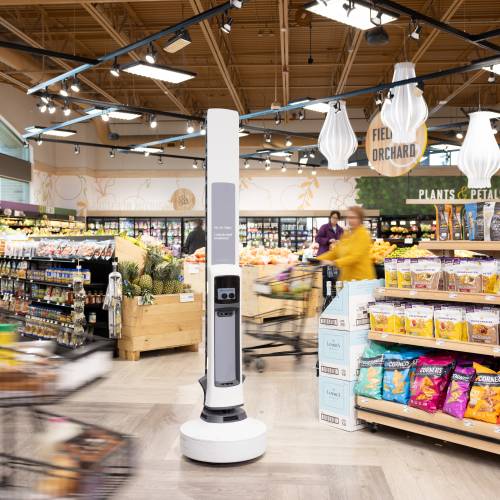
“Tally monitors product location daily and provides that information to our customers in our rewards app. If a customer uses our app for their shopping list, the items are sorted based on location data from Tally. When they search for an item we give them the exact aisle, side, and section number.”
Dave Steck
VP of IT Infrastructure and Application Development, Schnuck Markets
Reclaiming Revenue in E-Commerce
At the heart of a profitable brick-and-mortar/e-commerce crossover is the seamless integration of inventory data. Advanced sensors - like those that Tally uses - can capture real-time insight into product locations and stock levels, laying the foundation for three key strategies: synchronizing inventory across channels, optimizing pallet stacking to minimize waste, and leveraging real-time product access across sales platforms.
These AI-driven approaches enable retailers to enhance efficiency, reclaim sales opportunities, and elevate the grocery e-commerce experience.
1. Implement Omnichannel Inventory Management to Synchronize Stock and Manage Supply Chain Reorders
Using a comprehensive inventory management solution, stores can unlock real-time insight into where products are located and ensure inventory synchronization across channels. With insight into how much stock they have left, stores can receive an optimized, step-by-step schedule for item replenishment and automate the reorder process.
2. Enable Data-Driven Pallet Stacking to Streamline Access to Products
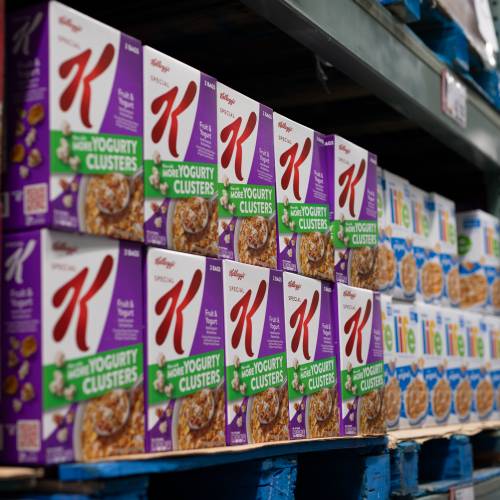
Strategic pallet stacking helps to mitigate shrink. It ensures pallets are stacked (or not) to avoid product destruction, and places pallets with closer expiration dates in a position to be sold first to avoid spoilage.
3. Integrate Product Location Data Across All Sales Channels – Including Mobile Apps
Real-time data enables retailers to surface product locations instantly for internal team members, customers, or third-party shoppers, whether that be through a centralized dashboard or a mobile app. Providing teams with optimized pick paths not only saves time, but also helps retailers sell goods faster. Shoppers find what they’re looking for instead of leaving empty-handed.
"When I put my shopping list into the store app, it's organized in walk order because Tally knows where everything is. So I just make one pass through the store instead of bouncing from aisle to aisle. It's one of my favorite ways we've leveraged the data from Tally.”
Kim Anderson
VP of Store Operations, Schnuck Markets