In a recent Omni Talk Retail interview, Chris Walton and Anne Mozinga chat with Bennett Morgan, Executive Vice President and Chief Merchandising Officer at SpartanNash, about how the company is using robotics and technology to transform grocery retail. Bennett shares insights into how real-time data is helping store teams work more efficiently while creating better shopper experiences.
The conversation goes beyond just technology — it addresses some of retail's most pressing challenges. Bennett dives into the everyday issues retailers face, like managing out-of-stocks and keeping pricing and promotions accurate, and explains how innovative technologies like computer vision and automation are helping solve these costly problems are helping to solve these problems for SpartanNash.
Q: Tell us about your role at SpartanNash and what it encompasses.
A (Bennett): Merchandising, at its core, means I buy things and sell them. And if I sell them for more than I buy them for, I’m doing a good job! But in all seriousness, I oversee merchandising strategy for our retail operations, ensuring we deliver the right products, at the right price, in the right stores. SpartanNash is a unique company—70% wholesale, 30% retail—so we have to be great at both. That means we not only run our own stores but also supply independent grocers, military commissaries, and major national accounts like Amazon and Dollar General.
Q: What are the biggest trends you're watching in grocery merchandising right now?
A (Bennett): Freshness is a top priority for us. Many of our stores serve smaller communities, where the local grocery store isn’t just a place to buy food—it’s a hub for the neighborhood. Customers expect high-quality fresh products, and we’re focused on delivering that. Another major trend is the role of technology in improving operations. We’re working to ensure that even our smallest independent retailers can access the same tech-driven efficiencies as major chains.
Q: SpartanNash recently expanded its partnership with Simbe Robotics. How are you using Tally, and what benefits are you seeing?
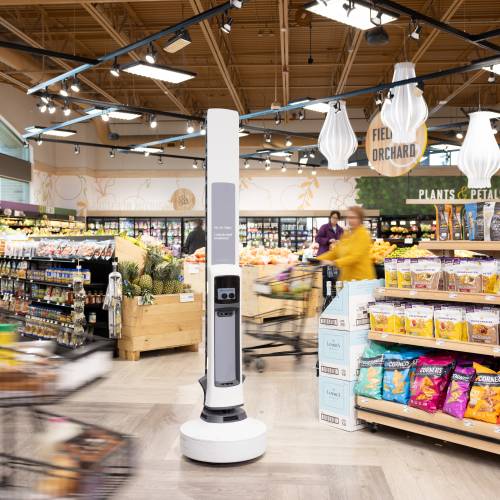
A (Bennett): We’ve rolled out Simbe’s Tally robots to 100 of our stores, focusing on our Michigan and Indiana markets. The biggest benefit? Digitizing the shelf. Historically, retailers relied on periodic manual audits to track in-stock positions, which led to gaps in data. Now, with Tally scanning shelves three times a day, we get real-time visibility into our inventory, pricing, and shelf conditions. That means fewer out-of-stocks, better price execution, and improved planogram compliance. It’s a game-changer.
Q: How does that data impact your merchandising decisions?
A (Bennett): One example: If we see a sales dip in a specific store, we can use Tally’s data to pinpoint the cause—maybe it’s a stock issue, maybe a pricing discrepancy, or maybe an execution error on a new product set. That insight allows us to take immediate action. We’re also using this technology to identify training opportunities for store teams and refine our vendor partnerships by providing suppliers with clearer performance metrics.
Q: Beyond robotics, what other technologies is SpartanNash exploring?
A (Bennett): We’re also testing Simbe’s stationary Tally Spot cameras, which provide continuous shelf visibility. But we’re especially excited about using technology to bridge the gap between store shelves and backroom inventory. By integrating shelf-scanning data with real-time inventory levels, we can create a more seamless replenishment process, reducing out-of-stocks and labor inefficiencies.
.jpg)
Q: How do you measure the success of these technologies?
A (Bennett): Two primary ways: First, in-stock improvement. If we’re keeping more products on the shelves thanks to Tally’s real-time data, that’s a clear win. Second, labor efficiency. Tally allows our teams to focus on solving issues rather than spending hours manually checking shelves. We’re also beginning to explore how this data can help vendors optimize distribution, further strengthening our supply chain.
Q: What’s next for SpartanNash and the role of AI in grocery retail?
A (Bennett): We’re going deeper into AI-powered analytics to drive better merchandising decisions. We believe the future of grocery is a blend of automation and human expertise—using AI to provide actionable insights while empowering store teams to focus on service and fresh execution. As we refine our approach, we see SpartanNash becoming an industry leader in leveraging real-time data for smarter, more efficient grocery operations.