Labor challenges in grocery and wholesale are well known, as the markets’ high turnover rates and rising labor costs are well documented. Operational efficiency in retail and store team productivity are also decreasing: Grocery employees are working more hours but at a lower output, resulting in an overall 1.1% reduction in worker productivity.
But progressive stores are streamlining operational efficiency in retail to save on time, labor and cost.
Kim Anderson, Vice President of Store Operations Support at Schnuck Markets, says actionable inventory intelligence eliminates the guesswork for store teams. “A task management screen queues up what the stores need to address that day, which are listed in walk order. Using Tally and Simbe’s platform has been an enormous time saver.”
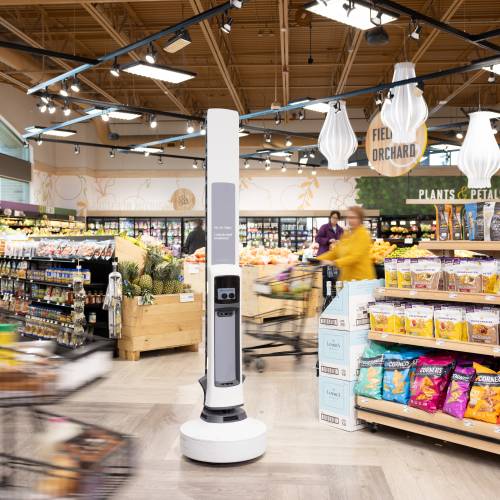
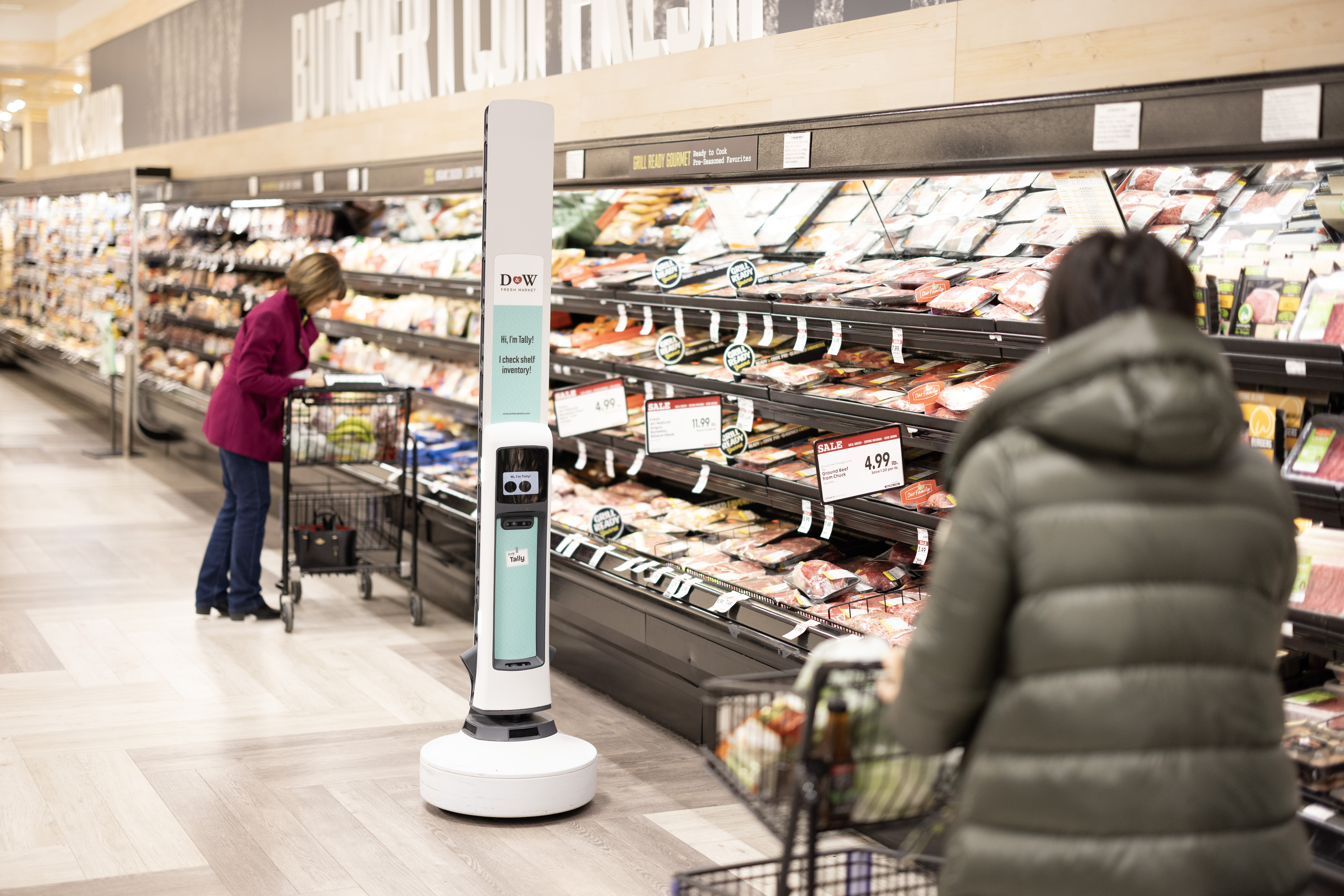
This article describes how store teams use autonomous retail robot, Tally, to improve store operations. Teams can optimize the way they manage inventory by having Tally traverse aisles and back rooms intermittently throughout the day, and collect the most up-to-date data on stock levels, pricing accuracy, precise item location, and more.
Retailers use Tally to achieve true visibility with automated scans.
Manual checks are a retail operations process that involves a lot of people and time, often taking up the majority of worker shifts. Even with multiple store associates working multiple hours, store teams usually have an incomplete picture of inventory, and store managers can’t verify exactly how much ground an employee covered on their shift. The next worker picking up the audit might not know exactly where the previous one stopped and inadvertently skip or recount items.
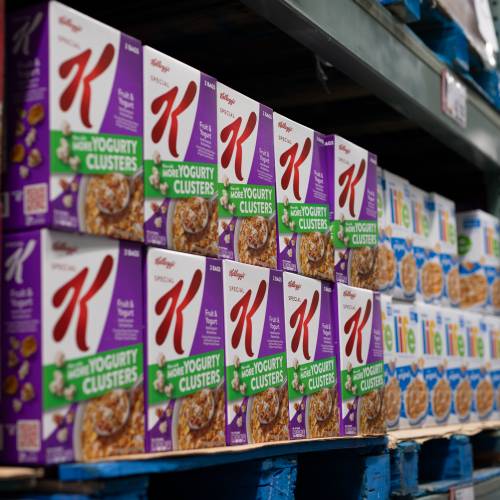
With automated inventory tracking, top retailers save valuable time and resources for teams. Today, the most operationally efficient stores are investing in robust intelligence and analytics capabilities to extract more accurate, relevant insights from across their store interiors. Store teams use this data to get products on-shelf—and in customers’ shopping carts—faster. In fact, associates can identify 10x more out-of-stock items than manual audits by using store intelligence solutions like Simbe’s.
It takes Tally about three hours to scan the average grocery store—identifying 10x more out-of-stock items than manual audits.
Retailers use Tally to give store associates an optimized, daily to-do list for inventory management.
On the store floor, motion equals money. Time spent helping customers find what they need, for example, is a necessary investment. But combing the back room for products or doubling back during inventory checks is a drain on store cost and revenue.
Tally’s scans improve operating efficiency in retail by capturing valuable inventory location data. With it, progressive retailers auto-generate optimized pick paths for workers replenishing low inventory or fulfilling online orders. Stores using paper tags print price & promotion labels in hang order, allowing employees to stand in one spot and hang all tags in a specific store section. On average, Tally frees up an additional 30 hours per week for store teams – creating operational excellence in retail.
Appointed by OmniTalk as North America’s most innovative grocer in 2023, Schnuck Markets has implemented Tally across their 115 retail stores and seen restock operations in particular benefit from Tally’s data. “A task management screen queues what the stores need to address for the day, which are listed in walk order,” said Kim Anderson, Vice President of Store Operations Support. The list guides employees through the aisles, allowing them to stock shelves within designated four-foot shelf sections at a time. “Associates have a condensed, defined number of steps they have to take to complete the work,” Anderson added. “Using Tally and Simbe’s platform has been an enormous time saver.”
On average, Tally frees up an additional 30 hours per week for store teams.
Retailers use Tally to save managers’ time, improve retail operating efficiency, and increase sales with more accurate ordering.
Inventory management is one of the biggest capital expenditures that grocery stores face. And it’s a crucial, but often time-consuming responsibility for department managers. Improved inventory management in stores reduces the likelihood of over- or under-ordering items. And with accurate ordering, customers are more likely to find items they want to buy in stock, which increases customer loyalty and lifetime value.
Tally’s advanced computer vision and machine learning typically identifies over 2,000 out of stocks every day, and what many are shocked to find is that 60% of those items believed to be out of stock are actually on-site and sellable! Instead of constantly needing to check pricing accuracy and stock levels, employees use Tally to update the store’s perpetual inventory. This automatically generates the necessary orders to replenish stock.
Typically, Tally identifies over 2,000 out of stocks every day, 60% of which are on-site and sellable.
Retailers use Tally to boost employee satisfaction to retain workers—and delight customers.
Grocery and club employees who leave their jobs cite the monotonous tasks and poor management as a top reason, leaving millions more open positions than people looking for work, industry-wide. Retail locations using technology like Tally to improve operating efficiency empower their teams to engage with the parts of their job that provide the most meaning: helping customers.
“Before we started using Tally, employees were spending probably 70% of their time on inventory management, with only a small remainder to serve customers,” Anderson said. With less time spent on stocks and ordering, department managers can also invest more in training, onboarding, and development that is more likely to keep associates happy and thriving.
“Before we started using Tally, employees were spending probably 70% of their time on inventory management, with only a small remainder to serve customers."
Automating repetitive or unsatisfying tasks frees up employees to engage with the parts of their job that provide the most meaning: helping customers.
Ultimately, store teams using Tally improve their operational efficiency – and are more fulfilled themselves by their jobs. If you’d like to learn more about empowering more efficient retail store operations with Tally, we’d love to hear from you!