The Hidden Challenge in Grocery Retail
In supermarkets across America, a sustainability crisis unfolds daily, largely unseen by shoppers. U.S. grocery stores discard approximately 16 billion pounds of food annually, with around 30% of food in retail going to waste. This massive inefficiency isn't just an environmental concern, it represents billions in lost revenue for retailers operating on razor-thin margins.
The problem isn't typically a shortage of inventory. In fact, it's quite the opposite. Retailers commonly overstock their backrooms to avoid empty shelves. However, without proper visibility into what actually needs to be on the sales floor at any given moment, that excess inventory often sits idle until it spoils, particularly in perishable food categories.
Data-Driven Solutions: 8.5x Better Visibility
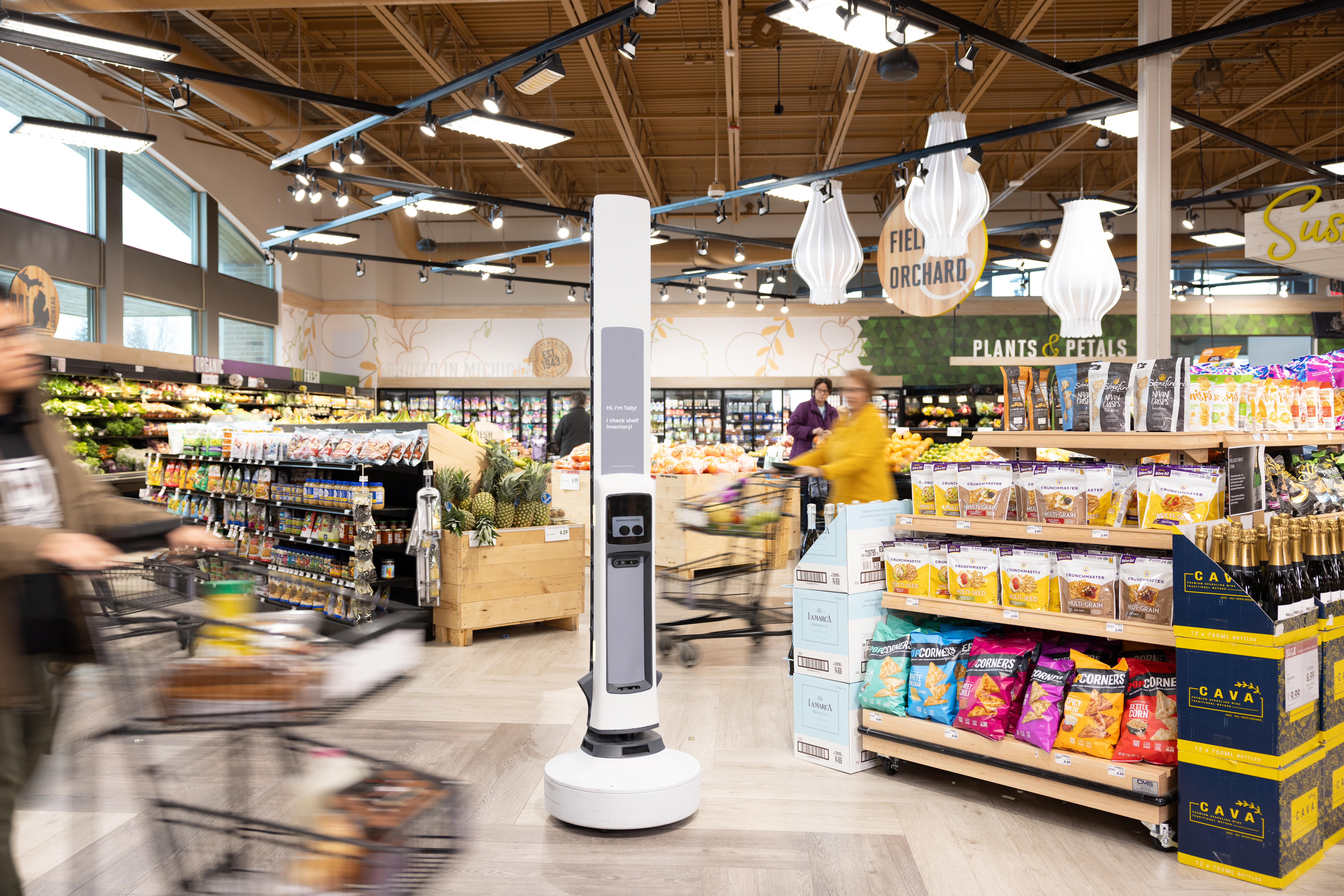
Recent analysis conducted between March 30 and April 5 across multiple retail locations revealed a significant visibility gap in traditional inventory management. Store teams using conventional methods typically identify around 100 out-of-stock items per day through manual scanning. By comparison, the Tally automated inventory system detected:
- 740 out-of-stock events per day
- 106 low-on-shelf events per day
- A total of 846 daily restocking opportunities
This represents an 8.5x improvement in shelf visibility—a game-changing advantage for preventing food waste. Rather than discovering empty shelves after products have disappeared, store teams can receive alerts at precisely the right moment to restock items before availability becomes an issue for shoppers.
Translating Improved Visibility into Environmental Impact
If this 8.5x visibility improvement were implemented at scale, the environmental impact would be substantial. Our analysis suggests that food waste in retail could potentially drop from the current 30% to just 3.5%—representing an 88.3% reduction in grocery food waste.
At a national scale, the numbers become even more impressive:
- The U.S. generated 62.9 million tons of food waste in 2023
- The retail sector contributed approximately 2.6 million tons (4.1%)
- With Tally's potential 88.3% waste reduction, up to 2.3 million tons of food waste could be prevented annually
The climate benefit is equally significant. According to EPA estimates, food waste accounts for 170 million metric tons of CO₂e emissions annually. With retail contributing 6.97 million metric tons of this total, the potential reduction amounts to 6.15 million metric tons of CO₂e saved—equivalent to removing over 1.3 million passenger vehicles from the road for an entire year.
Beyond Empty Shelves: Optimizing Product Facings
The data reveals another critical opportunity for waste reduction through facing optimization. Analysis of sell-through rates at large nationwide grocer during the same period showed that 26% of slow-moving products (those in the bottom 20% for sell-through time) are currently assigned multiple facings on shelves, despite their low sales velocity.
This inefficient space allocation creates a double problem:
- Slow-moving products occupy valuable shelf space that could be allocated to faster-selling items
- These products are prone to overstocking and eventual spoilage due to their extended sell-through times
- By adjusting facing allocations based on actual sales velocity data, retailers can significantly reduce waste while simultaneously improving the availability of high-demand items.
The Human Element: Empowering Store Teams
Perhaps the most overlooked benefit of this technology is its impact on store associates. Instead of the impossible task of manually scanning thousands of products daily, team members can now focus their efforts on responding to data-driven insights. This not only improves efficiency but creates a more engaging work environment where employees can see the tangible results of their efforts in reduced waste and improved shelf conditions.
For shoppers, the benefits include fresher products, better availability of desired items, and the satisfaction of supporting retailers who are measurably reducing their environmental footprint.
Looking Forward: Scaling the Solution
While the data presented here represents a limited implementation period, it clearly demonstrates the potential for technology to address one of retail's most significant sustainability challenges. As more retailers adopt advanced inventory management systems like Tally, we can expect to see continued progress in reducing food waste throughout the supply chain.
The path to sustainable retail isn't just about new products on shelves, it's increasingly about using technology to fundamentally improve how those shelves are managed. And with potential waste reductions of nearly 90%, this approach represents one of the most promising opportunities for retail to contribute meaningfully to global sustainability goals.