
Having a precise inventory count of items inside retail locations is challenging. Maintaining a real-time view of product pricing, promotion accuracy, and exact product locations is equally difficult. Manual inventory audits, which are time-consuming and labor-intensive, often fall short of providing a comprehensive and reliable view.
Increasingly, retail leaders are turning to cameras and computer vision technology to solve these problems. But not all cameras are created equal, and there's more than one way to utilize them for inventory management in stores. Knowing whether to use fixed cameras or autonomous mobile robots (AMRs) can save retailers 5% in operating margin and 4.5% in annual revenue through better inventory management.
Let's break down these two imaging technologies to help you decide which solution is best for your needs.
Fixed Cameras: Strengths and Limitations for Retail Stores
Fixed cameras work better in environments with smaller footprints, like convenience stores, where shorter, narrower aisles make it possible to capture higher-quality images of opposing shelves. Smaller retail locations could also use fixed infrastructure for continual pictures of high-traffic areas or high-value shelves. In larger store formats, fixed shelf cameras can be a good solution for monitoring security, especially at self-checkout counters, thanks to their continuous coverage capabilities.
While suitable for smaller stores, fixed cameras can lead to coverage gaps in larger settings like grocery stores or wholesale clubs. Achieving full coverage can be costly, and the cameras are prone to damage in busy locations, increasing maintenance costs. Additionally, fixed cameras often provide lower image quality than traversing robots, affecting the reliability of computer vision algorithms.
Autonomous Mobile Robots (AMRs): Strengths and Limitations for Retail Stores
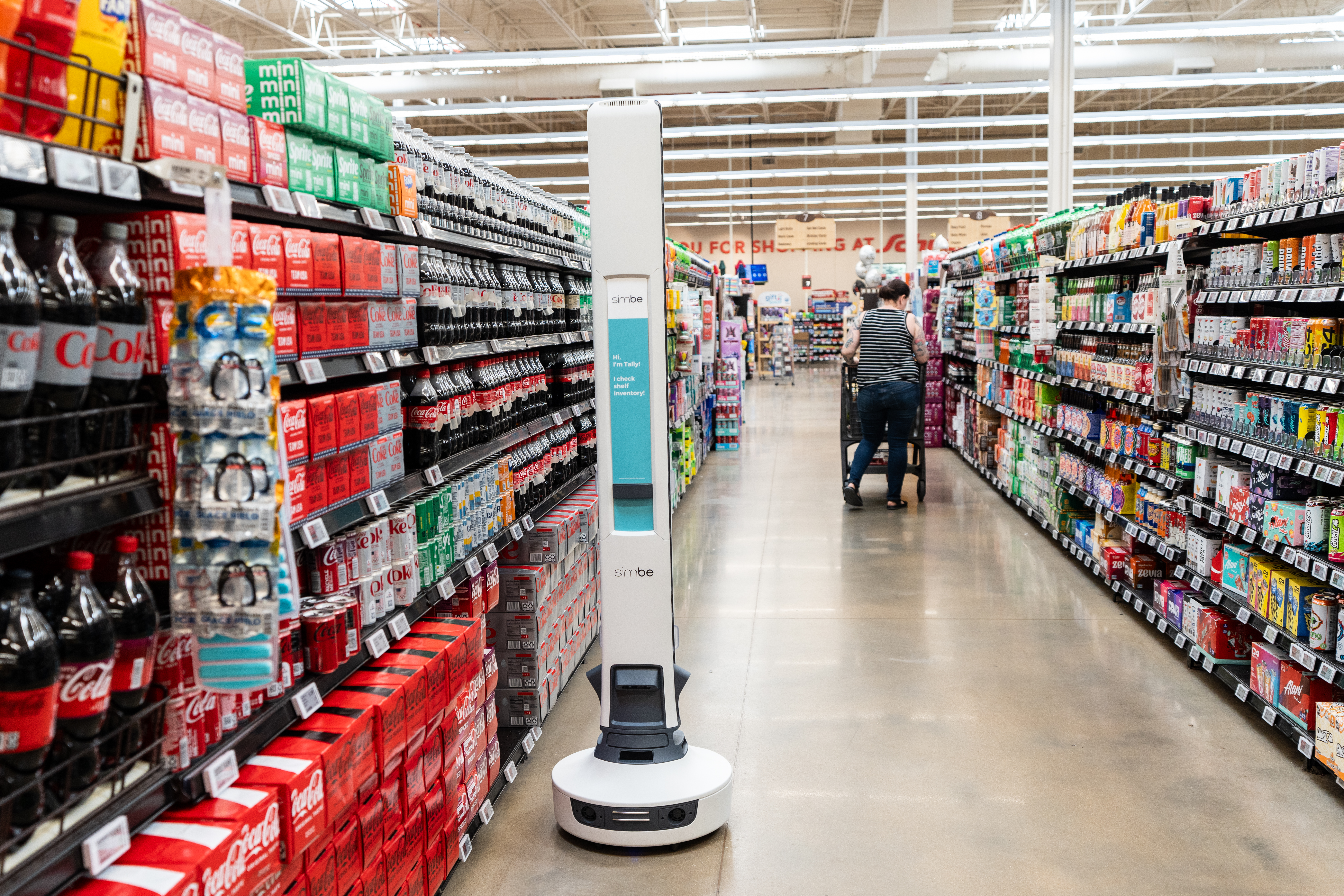
For medium to large stores, autonomous mobile robots excel in capturing reliable shelf data. Although they may have a higher upfront cost, mobile robots require fewer units to cover more of the store than fixed infrastructure. Robots' cameras are precise enough to read minute details of price tags and measure shelf depth accurately, understanding when items are low, not just completely out. Robots also offer the added visibility to gather comprehensive data from high shelves, often beyond the reach of store associates. Additionally, setup is quick and easy with minimal infrastructure requirements or ongoing maintenance costs.
However, they do have limitations, such as potentially higher upfront costs and may not be best suited for small-format stores.
Deployment & Coverage Comparison: What In-Store Retail Technology Is Best for You?
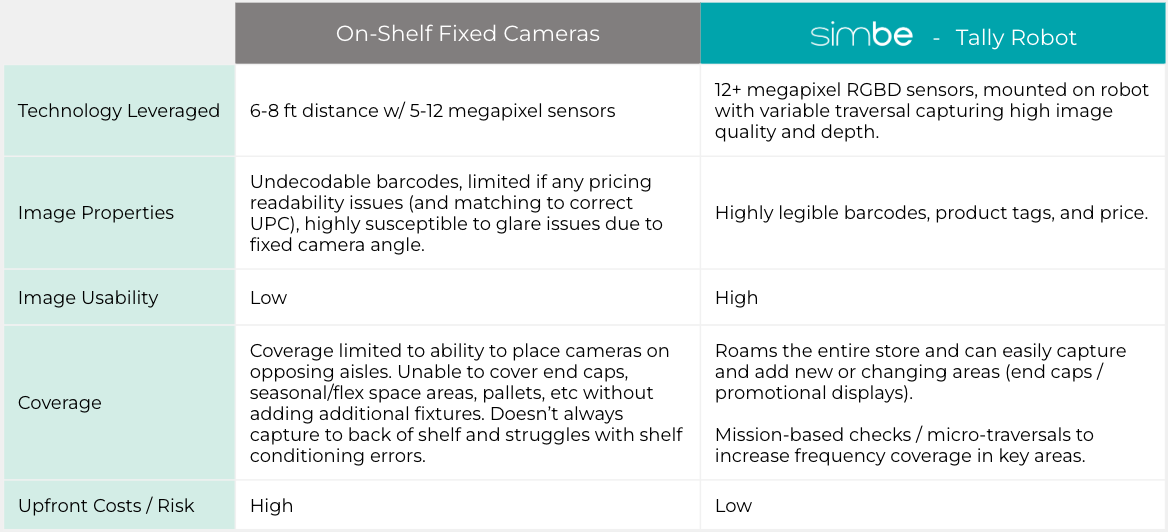
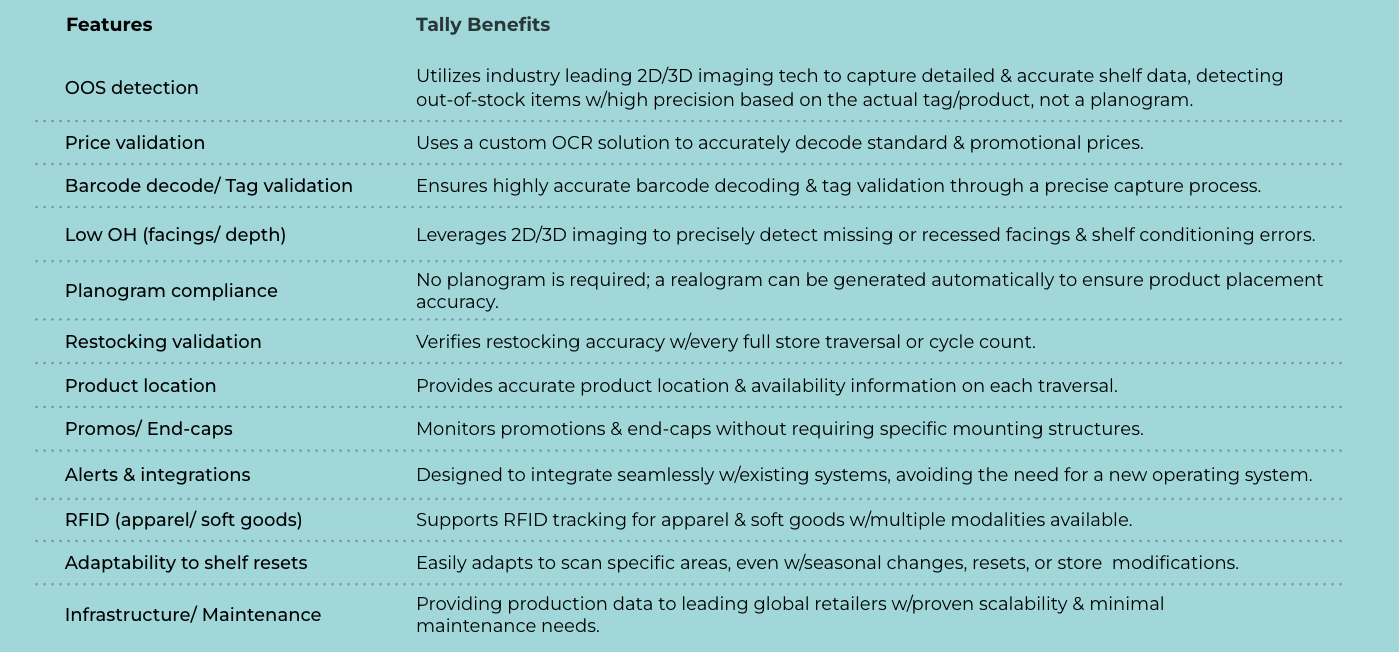
To further illustrate the differences, here are three tables comparing the capabilities of fixed cameras to Tally, our autonomous mobile robot.
Tally vs. On-Shelf Fixed Cameras
Tally Feature Benefits
Technology Details